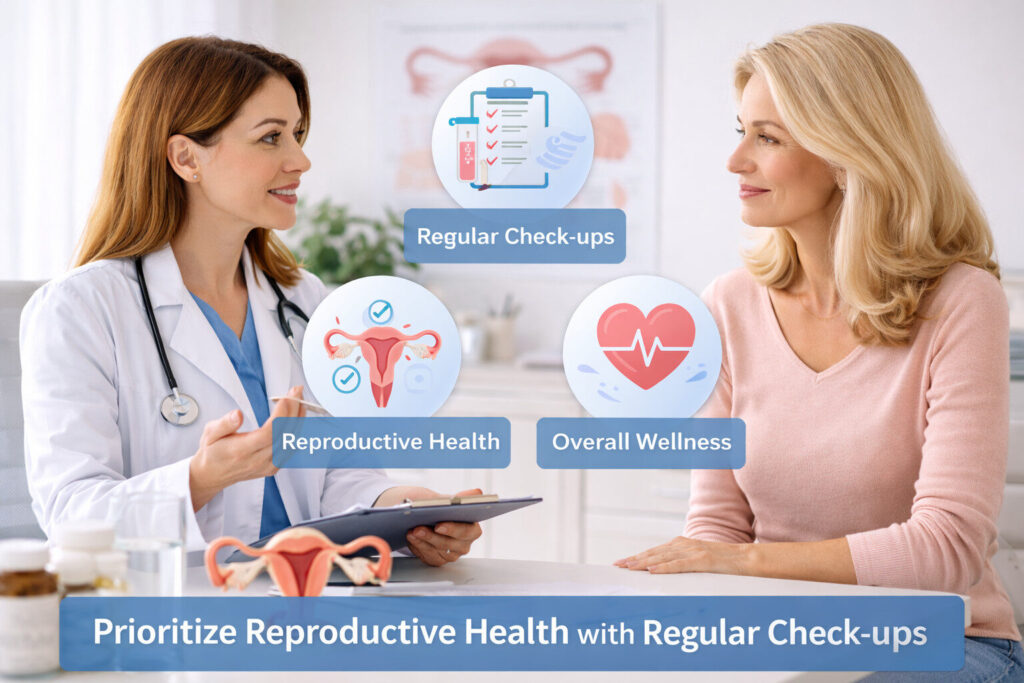
Why Regular Check-ups Are Important for Reproductive Health
-
Prevention of Serious Conditions
Early detection through routine check-ups allows Dr. Saba to identify issues such as fibroids, endometriosis, or cervical cancer before they cause significant harm. This proactive approach can save lives and improve health outcomes. -
Monitoring Menstrual Health
Irregular periods, severe cramps, and heavy bleeding can indicate underlying health issues, including hormonal imbalances or fibroids. Regular check-ups help monitor menstrual health and address any abnormalities. -
Fertility and Family Planning
Reproductive health screenings are especially important for women who are planning to have children. Tests like hormone level checks, ultrasounds, and fertility assessments can help identify any issues early on, ensuring better chances for conception. -
Sexual Health Protection
Sexually transmitted infections (STIs) are common, but they often don’t show symptoms in the early stages. Regular gynecological check-ups allow for STI screening, helping women maintain sexual health and prevent long-term complications. -
Early Detection of Cancer
Pap smears and HPV tests are vital for detecting early signs of cervical cancer, which can be treated effectively when caught early. Regular screenings at Dr. Saba’s clinic ensure that any abnormalities are addressed before they develop into serious conditions.
What to Expect During a Routine Gynecological Check-up
When you schedule a regular check-up with Dr. Saba, you can expect the following:
-
Consultation: Dr. Saba will ask about your medical history, any reproductive concerns, and your family planning goals.
-
Physical Exam: This may include a pelvic exam, breast exam, and an assessment of your overall reproductive health.
-
Tests and Screenings: Depending on your age, health, and concerns, tests like Pap smears, HPV tests, and ultrasounds may be recommended.
-
Discussion: After the exams, Dr. Saba will discuss the results with you and recommend any necessary treatments or lifestyle changes
How Often Should You Get Checked?
-
Age 21 to 29: Every 3 years for a Pap smear.
-
Age 30 to 65: Every 5 years if combined with an HPV test.
-
Over 65: If you’ve had normal results in the past, you may not need frequent screenings, but this should be discussed with Dr. Saba
Conclusion
Reproductive health is a cornerstone of overall well-being for women, and regular check-ups are essential to maintain it. By visiting Dr. Saba’s clinic in Sharjah, you are taking a proactive approach to your health, ensuring that any potential issues are detected early and treated appropriately. Schedule your gynecological check-up today and take control of your reproductive health.